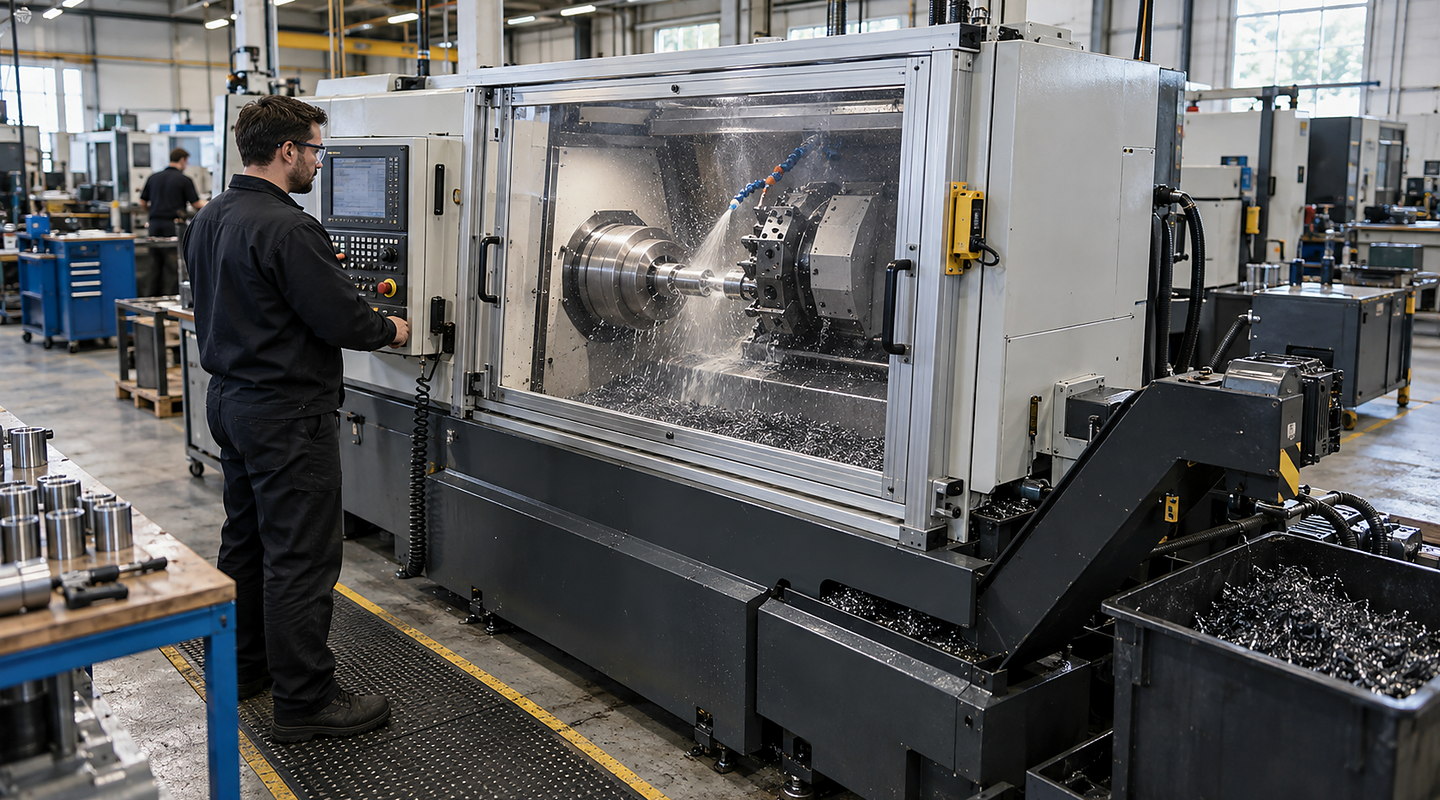
Drill Press Guards FAQs
Drill-press guard answers on chuck and tool coverage, workholding, setup and cleaning access, fixing, controls and evidence before return to service.
A drill-press guard needs a machine-specific assessment of the chuck, tool and spindle movement together with workholding and access tasks. Include the full tooling and workpiece range, normal adjustments, tool changes and swarf removal. Agree coverage, mounting and any control function before inspecting and recording the completed modification.
Prepare the machine and workholding information and compare the same task and installation evidence. A visible screen, catalogue dimension or single demonstration does not establish protection across every intended job.
Get practical answers for your application — Drill Press Guards
Plan drill press guards around your machine hazards, operator tasks, access, stopping behaviour and validation evidence. Discuss a site-specific safeguarding concept with Oxford Machine Guarding. The answers below explain suitable applications for Drill Press Guards, what information helps and what still needs an application-specific check.
Discuss your application
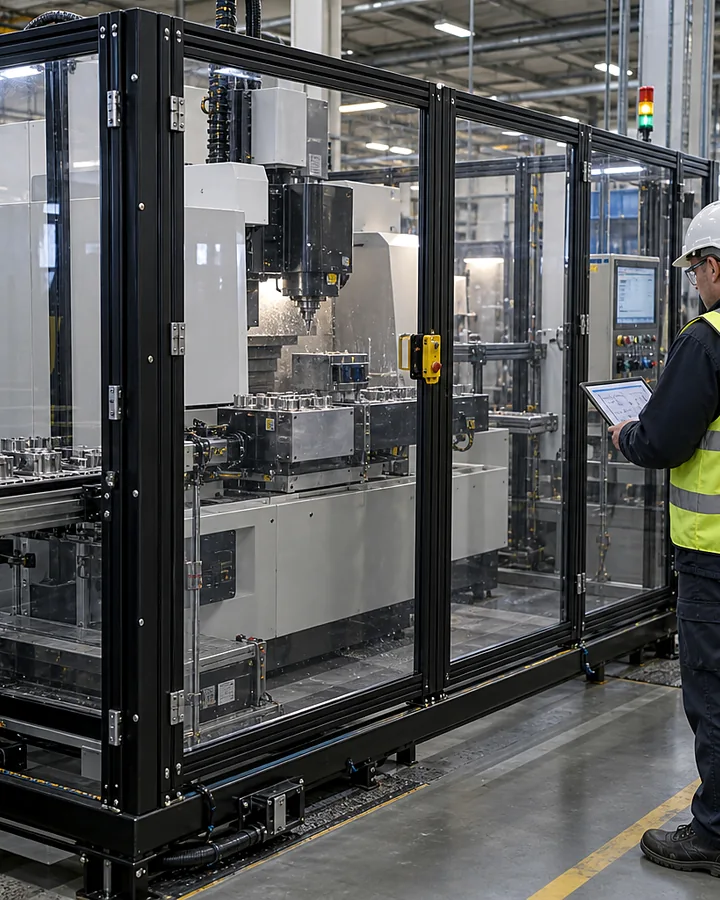
Practical answers about drill press guards
What should we consider when selecting a drill-press guard?
Record quill travel, chuck and tool range, table movement, workpiece sizes and clamping. Include loading, feed-handle access, tool changes and swarf removal. Have competent personnel review rotating-part contact, ejection, stopping and interventions, then assess coverage, mounting, adjustment, visibility and any control interface on the actual drill.
How should a project for drill press guards begin?
Start with the drill make and model, photographs of current safeguards and workholding, and normal and extreme working positions. Describe intended tasks and interventions, stopping and isolation arrangements. Use the site survey and task assessment to define the safeguarding concept and modification scope before choosing hardware.
Can you quote drill press guards from a short description?
An early budget range may be possible, but a reliable scope for safeguarding existing machinery for drill-press spindle and chuck guards needs the product or part range, line connections, site conditions and your requirements for risk-reduction and validation evidence.
What information should we send about drill press guards?
Send authorised machine drawings or photographs, quill and chuck details, the longest and shortest tooling, table travel, workpiece sizes and clamps or fixtures. Include loading, adjustment, cleaning and tool-change tasks, proposed fixing points, existing controls and any known stopping information.
How will performance be checked?
Agree checks for the assessed machine configuration: coverage through the intended tool and workpiece range, mounting, clearances, adjustment and visibility, plus any defined interlocking or other safety functions. Retain test results, operating limitations, instructions and maintenance arrangements, and close outstanding actions before return to service.
What are the main limitations?
Current standards and required performance levels must be assessed for the complete machine and intended use. A site survey and task-based risk assessment are required before a safeguard is selected. Mechanical changes can affect access, visibility, cleaning and machine operation.
What alternatives should be considered for safeguarding existing machinery for drill-press spindle and chuck guards?
Compare fixed physical guarding where access is rare with interlocked or presence-sensing protection where frequent intervention is foreseeable. For Drill Press Guards, the practical option may be simpler than the most automated one.
Can the proposed solution guarantee regulatory compliance?
No solution can guarantee compliance on its own. Applicable law, current standards, risk assessment, validation and conformity responsibilities must be addressed for your complete application.
Who will handle my enquiry?
Oxford Machine Guarding will receive enquiries from drillpressguards.co.uk. Call 01865 416840 or email sales@oxfordmachineguards.co.uk to speak with the team directly.