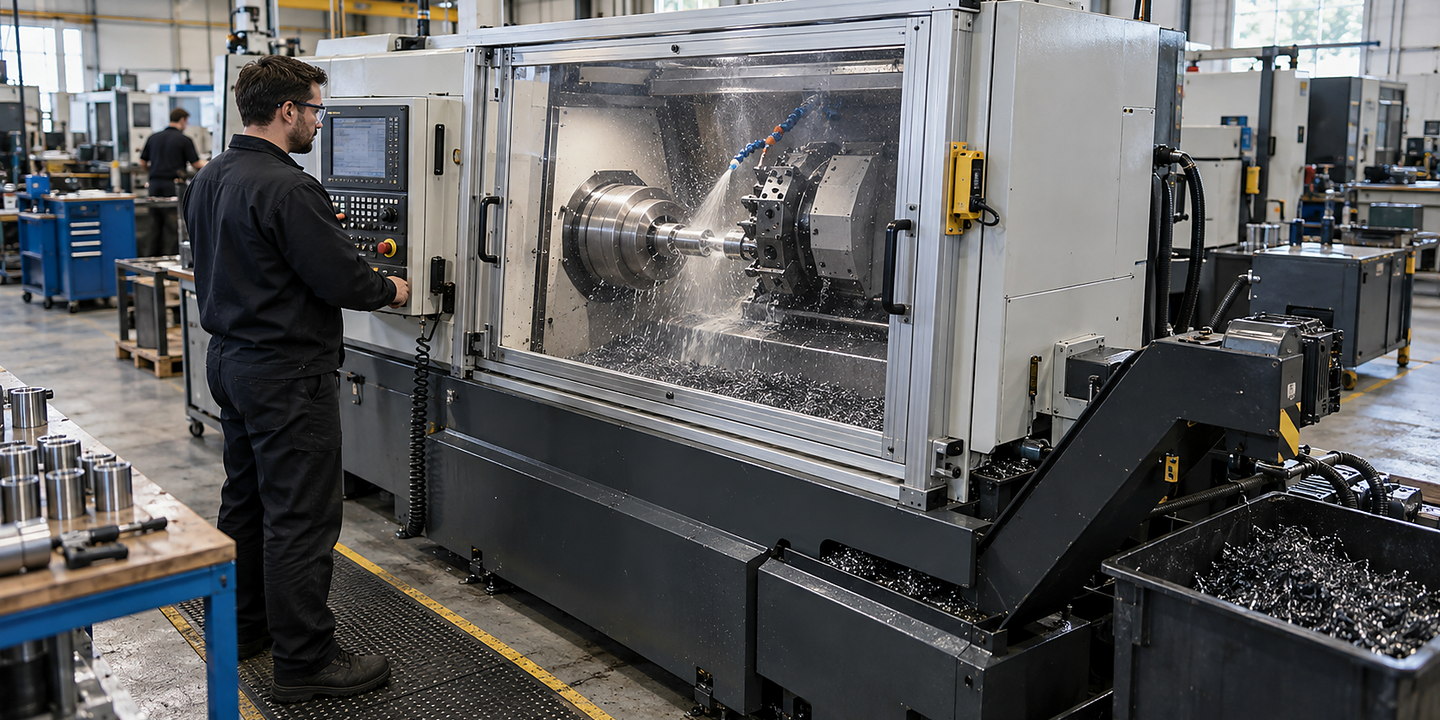
Compare a drill guard against the full working envelope
A drill-press guard must be considered alongside the spindle, chuck, tooling, workholding and the tasks used to set up the machine. A transparent screen and a guard that controls access can have different functions.
Record the extreme working positions
Include the longest and shortest tooling, quill travel, table height and workpiece size. Show how the work is loaded and clamped and where the operator needs to see the cutting area. A guard that fits one demonstration setup may leave a different opening when the table or tool changes.
Keep workholding in the review
Document the intended clamp or fixture and the clearance needed to use it. The safeguarding assessment should consider foreseeable movement of the workpiece as well as contact with rotating parts. Do not treat a screen as a substitute for a suitable workholding method or the machine operating instructions.
Assess access during setup and cleaning
Identify chuck-key use, tool replacement, measurement and swarf removal as separate tasks. The competent assessment should establish when isolation is required and how access is controlled. Do not provide access by defeating an interlock or moving an adjustable guard out of its assessed position.
Compare complete installation scope
Check mounting rigidity, adjustment, visibility and any required control integration together. Obtain a record of the configuration assessed, operating limitations and checks after installation. Selecting a guard by chuck diameter alone leaves these machine-specific decisions unresolved.
Review drill-press guarding options
Further reading: HSE PUWER overview.